
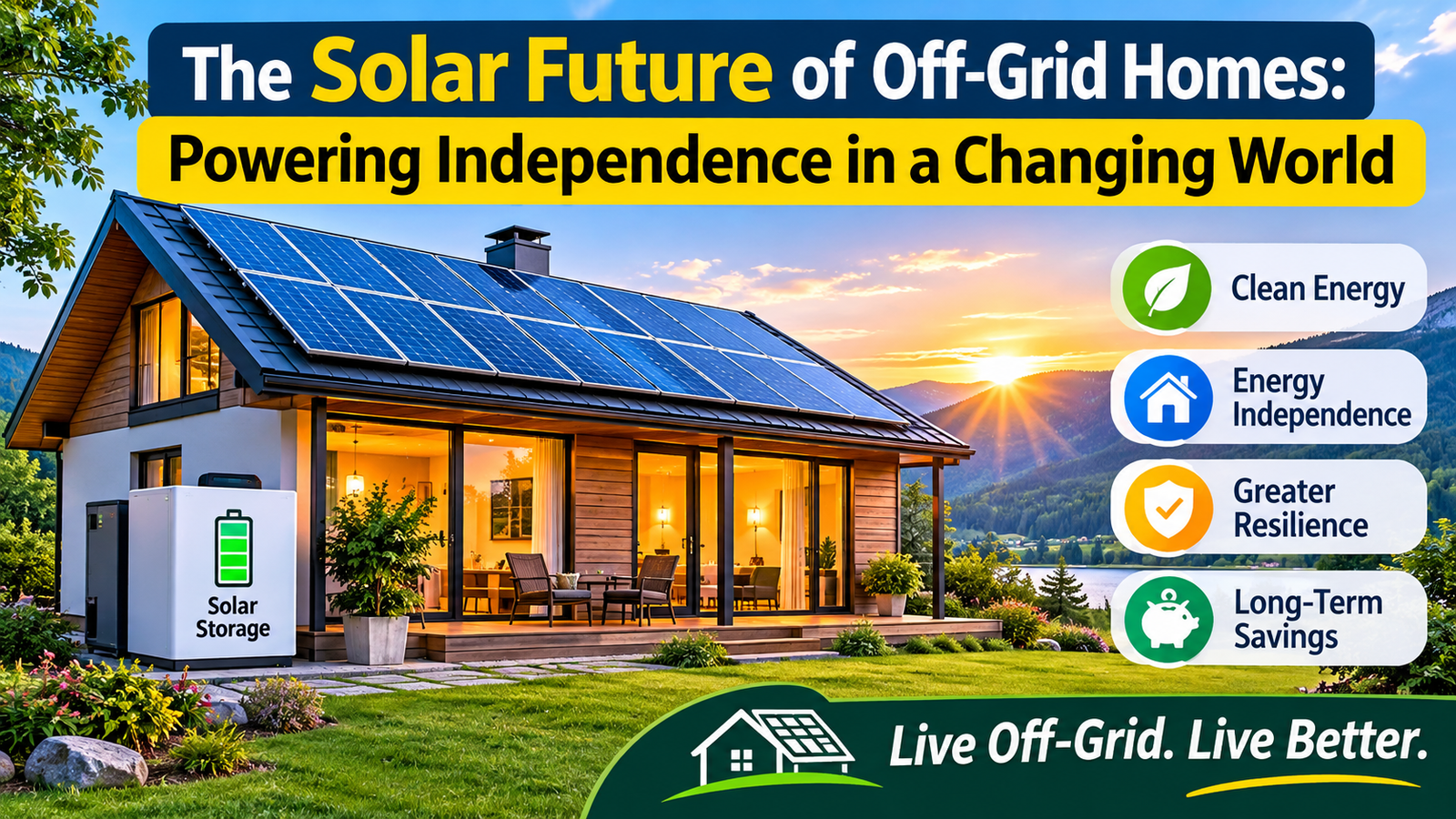
The Solar Future of Off-Grid Homes: Powering Independence in a Changing World
For decades, living off-grid meant accepting limitations—dim lights, limited appliances, and the constant worry of cloudy days. That era is ending. Today, solar technology is rewriting what independence looks like, turning off-grid homes from fringe experiments into practical, high-performance living spaces.
The shift begins with the panels themselves. Modern solar modules deliver significantly higher efficiency than those of even five years ago. High-efficiency monocrystalline and bifacial panels capture more energy from the same roof space, while thinner, lighter designs make installation easier on remote or unconventional structures. Paired with improved mounting systems and better resistance to harsh weather, solar arrays now produce reliable power in locations once considered marginal.
Yet panels alone do not create a livable off-grid home. The real breakthrough lies in energy storage. Lithium iron phosphate (LiFePO4) batteries have become the new standard for residential off-grid systems. They offer longer cycle life, greater safety, and deeper usable capacity than older lead-acid banks. Many systems now include smart battery management that optimizes charging, predicts energy needs, and even prioritizes critical loads during extended low-sun periods. Some advanced setups integrate vehicle-to-home technology, allowing electric vehicles to serve as mobile power reserves.
Smart energy management completes the picture. Modern off-grid systems use sophisticated inverters and monitoring apps that give homeowners real-time visibility into production, consumption, and remaining capacity. AI-assisted load forecasting can shift non-essential uses—such as water heating or laundry—to peak production hours. When combined with efficient appliances, LED lighting, and thoughtful passive design, these systems dramatically reduce the size of the solar array and battery bank required.
The economic case is strengthening as well. Hardware costs continue to fall while performance rises. In many regions, the lifetime cost of a well-designed solar-plus-storage system already undercuts the expense of extending grid infrastructure to remote properties. For those seeking resilience against outages, rising utility rates, or simply greater autonomy, the return on investment is increasingly clear.
Challenges remain. Upfront capital costs can still be significant, and proper system design requires expertise to match local climate, energy habits, and future needs. Maintenance, though far simpler than in the past, is not zero. Yet these hurdles are shrinking. Prefabricated solar kits, modular battery systems, and improved financing options are making off-grid solar more accessible.
Looking ahead, the trajectory is unmistakable. Falling costs, rising efficiency, longer-lasting storage, and smarter controls will continue to expand what is possible. Off-grid homes will not merely survive without the grid—they will thrive, offering quiet, clean, and self-reliant living that aligns with both environmental values and practical resilience.
The solar future of off-grid homes is no longer a distant promise. It is arriving now, panel by panel, battery by battery, and home by home. For those ready to step away from traditional power lines, the tools to live freely and sustainably have never been stronger.
