Data Center Zinc Whiskers: Causes, Risks, Detection, and Prevention
Data Center Zinc Whiskers: Causes, Risks, Detection, and Prevention
Meta Description: Learn what zinc whiskers are, why they are dangerous in data centers, how they form, how to detect them, and the best methods to prevent costly equipment failures.
Data Center Zinc Whiskers: A Complete Guide
Most people think power failures, overheating, or cyberattacks are the biggest threats to a data center. However, there is another hidden danger that can damage expensive IT equipment: zinc whiskers.
These tiny metallic filaments are almost invisible to the human eye. Yet they can travel through cooling systems, enter servers, and cause electrical short circuits. Understanding zinc whiskers is essential for maintaining reliable and safe data center operations.
What Are Zinc Whiskers?
Zinc whiskers are extremely thin, hair-like metallic filaments that grow naturally from galvanized steel surfaces.
They usually develop on raised-access floor panels, cable trays, support structures, and other galvanized components found in data centers.
Although they are only a few millimeters long, they are electrically conductive and can damage sensitive electronic equipment.
Why Are Zinc Whiskers Dangerous?
Modern servers contain densely packed electronic circuits.
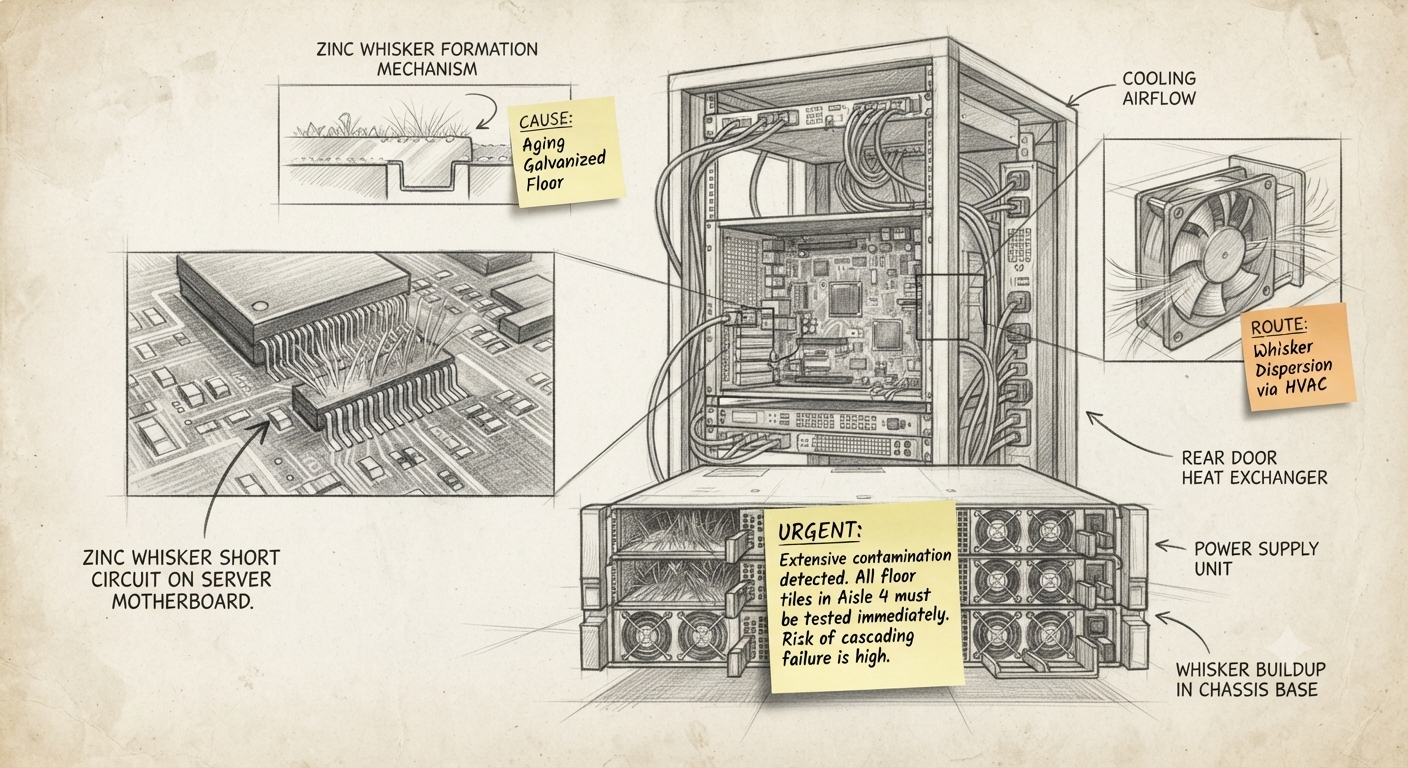
When zinc whiskers become airborne, cooling fans can pull them inside servers, storage systems, and network switches.
If a whisker bridges two electrical contacts, it can create a short circuit.
Possible consequences include:
- Server failures
- Storage device damage
- Network outages
- Unexpected system reboots
- Hardware replacement
- Costly downtime
How Zinc Whiskers Form
Zinc whiskers develop naturally over time.
Mechanical stress within galvanized zinc coatings causes tiny metal crystals to grow outward from the surface.
Several factors accelerate growth.
Aging Materials
Older galvanized floor panels are more likely to produce whiskers.
Mechanical Vibration
Walking on raised floors or moving heavy equipment creates stress in galvanized coatings.
Temperature Changes
Repeated heating and cooling cycles contribute to whisker growth.
Humidity
High humidity may increase corrosion and surface changes that encourage whisker formation.
Where Are Zinc Whiskers Found?
They commonly appear on galvanized steel components inside data centers.
Common Location| Risk Level
Raised Floor Panels| Very High
Floor Supports| High
Cable Trays| Medium
Air Duct Components| Medium
Steel Brackets| Medium
Equipment Supports| Low to Medium
Raised-access flooring is the most common source.
How Zinc Whiskers Damage Equipment
The damage process happens in several stages.
Step 1
Whiskers grow from galvanized metal surfaces.
Step 2
Airflow from cooling systems loosens them.
Step 3
Cooling fans pull whiskers into servers.
Step 4
The whisker lands on an electronic circuit board.
Step 5
An electrical short circuit occurs.
This entire process may happen without visible warning signs.
Signs of Zinc Whisker Contamination
Data centers rarely notice whiskers immediately.
Instead, operators may observe unusual hardware problems.
Common warning signs include:
- Random server crashes
- Unexplained hardware failures
- Network instability
- Frequent power supply failures
- Repeated circuit board damage
- Equipment that works after cleaning but later fails again
These symptoms often resemble other hardware issues, making diagnosis difficult.
How to Detect Zinc Whiskers
Because whiskers are extremely small, visual inspection alone is often insufficient.
Professional detection methods include:
Visual Inspection
Inspect raised floors using bright lighting and magnification.
Surface Sampling
Technicians collect particles from galvanized surfaces for laboratory analysis.
Microscopic Examination
Scanning electron microscopes (SEM) provide the most accurate identification.
Air Particle Testing
Air quality testing can detect metallic particles circulating through cooling systems.
How to Prevent Zinc Whiskers
Preventing contamination is much less expensive than replacing damaged equipment.
Best practices include:
- Replace aging galvanized floor panels.
- Use epoxy-coated flooring systems.
- Maintain clean underfloor spaces.
- Perform routine inspections.
- Control humidity levels.
- Install effective filtration systems.
- Follow preventive maintenance schedules.
These measures significantly reduce the risk of whisker-related failures.
Cleaning Zinc Whiskers
Cleaning requires specialized procedures.
Improper cleaning may spread contamination throughout the data center.
Recommended methods include:
- HEPA-filter industrial vacuum systems
- Electrostatic cleaning equipment
- Specialized contamination removal services
- Replacement of severely contaminated flooring
Compressed air should generally be avoided because it can disperse whiskers into the air.
Zinc Whiskers vs Tin Whiskers
Although both are metallic filaments, they differ in origin.
Feature| Zinc Whiskers| Tin Whiskers
Material| Zinc| Tin
Common Source| Galvanized Steel| Electronic Components
Main Risk| Airborne Contamination| Circuit Board Failure
Typical Location| Raised Floors| Solder Joints
Prevention| Replace Flooring| Better Component Design
Both can cause electrical shorts but originate from different materials.
Industry Standards and Best Practices
Many data center operators follow industry guidance to reduce contamination risks.
Common recommendations include:
- Routine environmental inspections
- Preventive maintenance programs
- Air quality monitoring
- Raised floor replacement planning
- Cleanroom-style housekeeping
- Equipment contamination assessments
These practices improve long-term reliability.
Best Practices for Data Center Operators
To minimize zinc whisker risks:
- Inspect raised floors annually.
- Replace damaged galvanized panels.
- Keep underfloor spaces clean.
- Maintain proper airflow.
- Monitor humidity.
- Train maintenance personnel.
- Use certified contamination control procedures.
A proactive maintenance strategy is the best defense.
Frequently Asked Questions
What are zinc whiskers?
Zinc whiskers are tiny metallic filaments that grow from galvanized steel surfaces and can become airborne inside data centers.
Why are zinc whiskers dangerous?
They can enter electronic equipment and create short circuits that damage servers and networking devices.
Where do zinc whiskers usually form?
They most commonly develop on galvanized raised-access floor panels and support structures.
Can zinc whiskers be removed?
Yes. Professional cleaning with HEPA-filter vacuums and specialized contamination removal techniques is recommended.
Are zinc whiskers common?
Older data centers with galvanized flooring are at greater risk, especially if preventive maintenance has been neglected.
How can zinc whiskers be prevented?
Replacing galvanized flooring with epoxy-coated materials, maintaining cleanliness, and conducting regular inspections are the most effective prevention methods.
Conclusion
Zinc whiskers are one of the least visible yet most serious contamination risks in data centers. These microscopic metallic filaments can become airborne, enter sensitive electronic equipment, and cause unexpected hardware failures or costly downtime.
Fortunately, zinc whisker problems are preventable. Regular inspections, proper housekeeping, humidity control, modern flooring materials, and professional contamination management can greatly reduce the risk. By recognizing this hidden hazard and following industry best practices, data center operators can protect critical infrastructure, improve equipment reliability, and maintain continuous business operations.