Data Center Water Usage: The Controversy, Facts & Modern Solutions
I Tried to Cool My Server Rack With a Tea Cup and Learned Why Data Centers Are So Thirsty
I remember staring at my small home lab server setup last summer, sweating bullets as the fans whined like jet engines. I actually wondered if I could dump a cup of cold tap water over the heat sink to quiet things down. Spoiler alert: that is a fast track to frying expensive hardware.
That little panic attack led me down a massive research rabbit hole about how massive commercial data centers handle cooling. Suddenly, I realized why people everywhere are protesting these mega-facilities over water usage. Let’s break down what is actually happening, why communities are fighting back, and how engineers are fixing it.
The Big Data Center Water Controversy
Why Communities Are Fighting Back
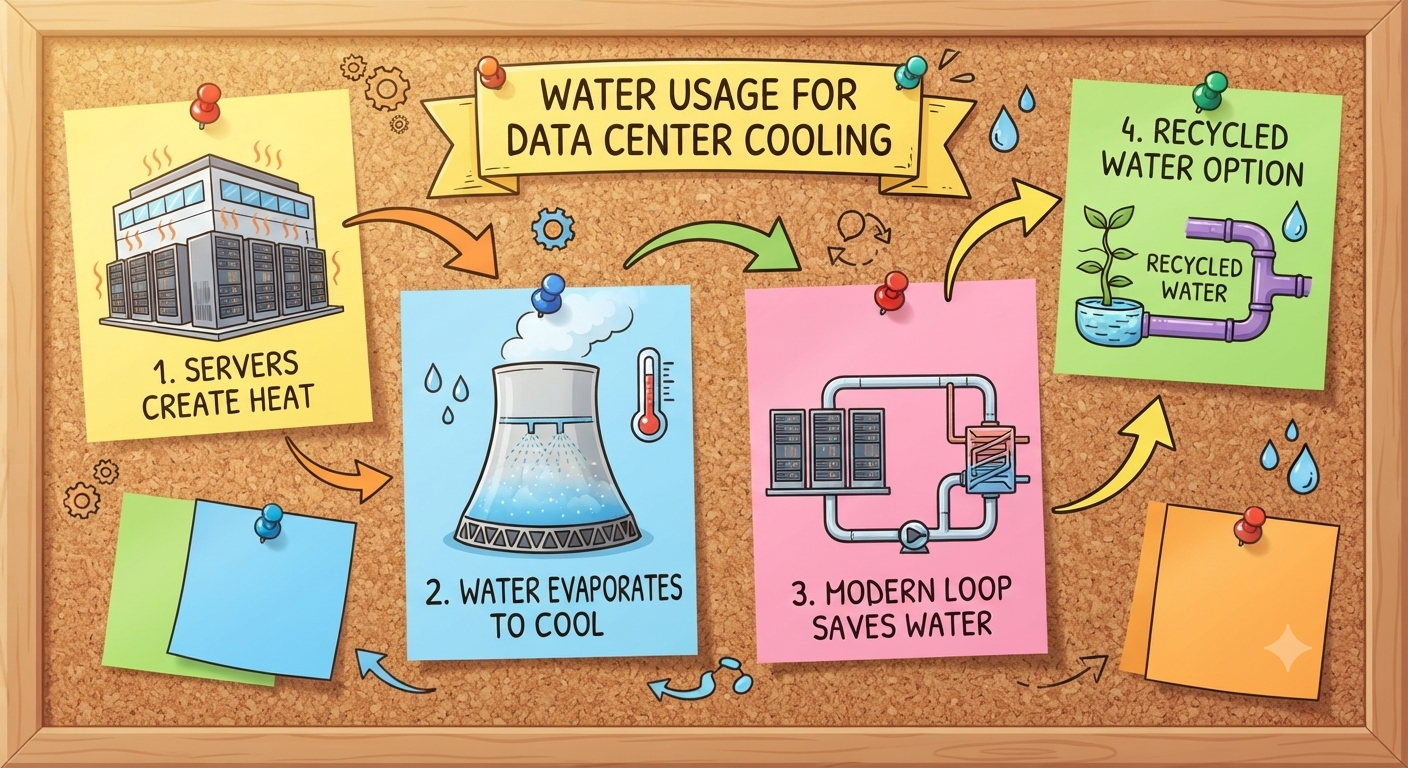
Every time I stream a movie or check my cloud backups, water is being consumed somewhere in the world. Traditional data centers rely heavily on evaporative cooling towers to keep thousands of servers from melting down. These facilities can guzzle millions of gallons of municipal drinking water every single day.
When a massive data center drops into a drought-prone neighborhood, local residents get understandably furious. People worry that tech giants are stealing their drinking water and driving up local utility bills. It feels unfair when everyday citizens are told to water their lawns less while tech hubs consume endless resources.
Why We Desperately Need Data Centers
Yet, trying to live without data centers today is like trying to breathe underwater. They power our global financial systems, remote work environments, and emergency healthcare databases. Without them, modern society would literally grind to a complete halt within seconds.
I look at data centers as the plumbing of the modern digital world. We cannot simply turn them off, because our entire economy relies on them to function. The real challenge is figuring out how to balance digital progress with environmental protection.
| Feature | Legacy Data Centers | Modern Eco-Friendly Data Centers |
|---|---|---|
| Cooling Method | Open evaporative cooling towers | Closed-loop and direct liquid cooling |
| Water Source | Municipal drinking water supplies | Recycled wastewater (“purple pipe”) |
| Daily Consumption | Millions of gallons per facility | Minimal evaporation or zero water use |
| Community Impact | High resource competition | Low to neutral community footprint |
How Modern Engineering Solves the Water Crisis
Closed-Loop Liquid Systems
Engineers are not sitting around ignoring the water crisis. Modern facilities are rapidly adopting closed-loop liquid cooling systems to stop wasting precious fluids. Instead of letting water evaporate into thin air, these systems circulate liquid through a sealed loop.
Think of it like the radiator in a car, where the same fluid keeps cycling over and over again. This method captures heat from servers and rejects it externally without continuous water loss. It cuts direct water consumption by up to ninety percent overnight.
Using Recycled Wastewater
When data centers do need to use water for cooling, smart operators refuse to touch drinking water. They tap into municipal recycled wastewater, often referred to in the industry as “purple pipe” water. This is treated sewage water that would otherwise go to waste.
By utilizing non-potable water, data centers protect local drinking supplies for human consumption. It is a brilliant win-win solution that keeps servers cool while respecting community resources.
Do all data centers consume massive amounts of water?
No, not all facilities are built the same way anymore. While older legacy structures wasted millions of gallons, modern facilities use advanced closed-loop systems. Many newer data centers consume virtually zero water for daily operational cooling.
Can data centers run entirely on air cooling?
Many facilities use smart air-side economizers when outside temperatures permit. They pull in cool external air instead of using energy-heavy chillers. However, in hot climates, liquid cooling remains much more efficient.
Are tech companies paying for the water they use?
Yes, operators buy water rights or pay standard municipal utility rates. However, public backlash usually focuses on resource scarcity rather than the money paid. Communities want to ensure local water tables remain safe and sustainable.
Conclusion: Balancing Digital Needs and Earth’s Resources
I still laugh when I think about my silly impulse to dump a cup of water on my hot home server. Managing heat is hard on a small scale, and it is a monumental engineering feat on a global scale. The tech industry has made mistakes in the past regarding resource management.
Fortunately, aggressive modernization and strict regulations are changing the landscape for the better. We can enjoy high-speed internet and cloud computing without draining our planet dry. The future of tech depends entirely on building smarter, greener infrastructure.
Frequently Asked Questions (FAQ)
What is a closed-loop cooling system?
It is a sealed piping network that circulates cooling fluid repeatedly without exposing it to the air. This stops water from evaporating and drastically reduces total consumption.
Why do data centers generate so much heat?
Servers pack millions of microscopic transistors into tight spaces running at high speeds. All that electrical energy converts directly into thermal energy that must be constantly removed.
How can ordinary citizens check local data center impacts?
Most municipal planning boards publish environmental impact reports for new tech developments. Reviewing these public documents helps communities stay informed about local utility strains.
The Bottom Line: We Can Have Cloud Computing Without Draining the Earth
Let us be completely honest with ourselves. Blaming data centers for using water is a fair complaint when we look at legacy designs, but shutting down the digital world is not an option. We cannot run modern global society on candlelight and paper ledgers just to save a few gallons of municipal water.
The path forward is not about stopping tech growth, but demanding absolute accountability from the industry. Modern engineering has proven that closed-loop systems, direct liquid cooling, and recycled wastewater can eliminate wasteful consumption entirely.
When tech companies invest in green infrastructure and local communities enforce strict environmental oversight, everyone wins. We get the high-speed connectivity our economy demands, and our planet keeps the water it needs to survive.