
Data Center Colocation Pricing: Complete Cost Guide
Data center colocation pricing depends on rack space, power capacity, bandwidth, connectivity, location, and contract terms. A small deployment may pay a monthly cabinet fee, while a large deployment may negotiate a rate per kilowatt (kW). The headline price rarely tells the whole story.
For a useful comparison, calculate the monthly cost of space, reserved or metered power, bandwidth, cross-connects, support, and installation. This guide explains each charge and shows how to compare colocation quotes without overlooking recurring fees.
How Much Does Data Center Colocation Cost?
Colocation providers sell rack units, cabinets, cages, and larger wholesale deployments. Each model has a different pricing structure. The following figures are indicative US-market benchmarks for 2026, not guaranteed quotes.
| Colocation type | Indicative monthly price | What to check |
|---|---|---|
| Individual rack unit | $75–$150 per U | Whether power is included |
| Half cabinet | $400–$900 | Included power and usable rack units |
| Full cabinet | $900–$2,500 | Cabinet capacity and power allowance |
| Wholesale colocation | Around $150–$235 per kW | Market, contract size, and electricity treatment |
| Private cage | Custom quote | Power commitment, cage construction, and security |
These are broad comparison figures from published market guides. They are not a universal average. Retail cabinet rates and wholesale power rates describe different products, so they should not be compared without checking what each price includes.
Colocation Cost Per Rack
A rack’s monthly price depends on more than its physical size. A 42U cabinet with a 3 kW power allocation may cost less than a similar cabinet designed for 15 kW or more.
Before comparing prices, confirm:
- Rack height and usable rack units.
- Available power and the billing method.
- Single or redundant power feeds.
- Cooling capacity and supported equipment density.
- Included bandwidth, IP addresses, and cross-connects.
- Contract length, installation fees, and annual increases.
Power Density Pricing Per kW
Power density describes the electrical load supported by a rack or cabinet. Providers may charge for committed kW, measured consumption, or a combination of both.
For example, a 5 kW commitment at $180 per kW per month costs $900 per month for the priced capacity. This calculation is valid only if the quote actually uses that rate and includes the services you expect.
High-density deployments may require different power distribution, cooling, and facility infrastructure. Ask whether the quoted capacity is available at your rack and whether the rate includes electricity or only reserved capacity.
Wholesale Colocation Rates
Wholesale colocation generally serves larger deployments with substantial power commitments and longer contracts. Pricing is often negotiated per kW per month.
Published North American benchmarks vary by market and contract scope. One 2026 market reference places wholesale pricing around $150–$200 per kW per month, while other indices report different averages. These rates may exclude metered electricity and additional services.
Compare wholesale proposals using the same power commitment, delivery date, redundancy, electricity terms, and contract duration.
What Determines Monthly Colocation Fees?
1. Rack Space and Cabinet Rental
Rack space is commonly sold by the rack unit (U), half cabinet, or full cabinet. A cabinet’s physical capacity does not guarantee that every rack unit can be used. Equipment depth, cable management, airflow, and power limits may restrict the installation.
Ask whether the quoted price includes the cabinet, rails, power distribution units (PDUs), locking doors, and installation. Also confirm the monthly charge for additional rack units.
2. Power and Electricity Charges
Power is one of the main cost drivers. A contract may charge for reserved capacity even when your servers use less power.
- Committed power: Pay for the agreed kW allocation.
- Metered power: Pay according to measured consumption, subject to the contract.
- Circuit-based pricing: Pay for specified electrical circuits or breaker capacity.
- Bundled pricing: Space and a defined power allowance are combined in one monthly fee.
Check whether electricity is included, billed separately, or adjusted using a facility PUE factor. Confirm how overages are calculated and whether unused reserved capacity can be reduced.
3. Bandwidth Pricing for Colocation
Bandwidth charges depend on traffic volume, committed capacity, port speed, and network provider.
| Pricing model | How it works | Best fit |
|---|---|---|
| Metered bandwidth | Charges follow a defined traffic measurement | Variable traffic |
| 95th-percentile billing | Bills a measured traffic percentile under the provider’s rules | Bursty traffic |
| Unmetered port | Fixed recurring price for an agreed port speed | Predictable high-volume traffic |
| Committed bandwidth | A recurring charge for an agreed capacity | Stable network demand |
A 1 Gbps port does not necessarily include unlimited data transfer. Check the committed rate, burst allowance, overage prices, traffic direction, and whether IP transit is included.
4. Cross-Connect Costs
A cross-connect links your equipment to a carrier, internet exchange, cloud on-ramp, or another customer within a facility.
Providers may charge an installation fee and a recurring monthly fee for each connection. Prices vary by building, connection type, provider, and contract.
Request a list of every required cross-connect. Include fiber or copper type, port speed, monthly recurring charge, installation charge, and any carrier fees. Multiple connections can make a noticeable difference to the total bill.
5. Power Usage Effectiveness (PUE)
Power usage effectiveness measures total facility energy against the energy consumed by IT equipment.
PUE = Total facility energy ÷ IT equipment energy
A PUE of 1.4 means the facility uses 1.4 units of total energy for every unit consumed by IT equipment. The difference covers cooling, power conversion, and other facility overhead.
PUE affects cost when the contract uses it to calculate energy charges. It should not automatically be multiplied into a quoted colocation rate: the provider may already include facility overhead in the price.
Ask for the measurement period, the PUE billing method, and whether the contract uses actual or fixed PUE.
Cabinet vs. Cage Pricing
A cabinet is a lockable rack enclosure. A private cage is a secured area that may contain several cabinets and dedicated infrastructure.
| Feature | Cabinet | Private cage |
|---|---|---|
| Space | One cabinet or partial cabinet | Multiple cabinets or a defined area |
| Pricing | Often a monthly cabinet fee | Usually a custom quote |
| Security | Locked cabinet | Separate physical boundary |
| Expansion | Add cabinets as needed | Expand within or beyond the cage |
| Best suited for | Small and medium deployments | Larger or security-sensitive deployments |
A cage is not automatically cheaper. Construction, access controls, power distribution, and committed capacity can increase the initial cost. Larger deployments may obtain better unit pricing, but the total commitment is higher.
When Wholesale Colocation Makes Sense
Wholesale colocation can suit organizations with substantial, predictable power demand. It may offer negotiated rates and more control over deployment requirements.
Before signing, confirm the minimum commitment, expansion rights, power delivery schedule, service-level agreement, and exit terms. A lower rate is of limited value if the provider cannot deliver the required capacity on time.
Colocation Setup Costs
One-time costs can include:
- Installation and cabinet preparation.
- Cage construction and access-control equipment.
- Power circuits and electrical connections.
- Cross-connect installation.
- Equipment shipping, receiving, and rack installation.
- Network configuration and migration.
- Deposits and other contractual charges.
Ask the provider to separate one-time charges from monthly recurring fees. Check whether installation costs are refundable, waived for longer contracts, or payable before service activation.
Rack Space Cost Calculator
Use this formula to estimate the monthly recurring cost:
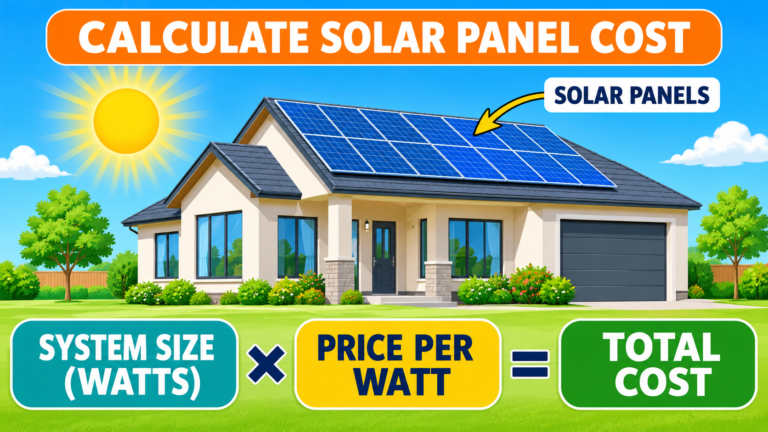
Monthly total = space + power + bandwidth + cross-connects + support + other recurring fees
Add one-time setup costs separately when estimating the first month’s cash requirement.
Worked Example
Assume a hypothetical cabinet deployment with the following quote:
| Cost item | Monthly amount |
|---|---|
| Cabinet rental | $800 |
| Reserved power: 5 kW × $180/kW | $900 |
| Bandwidth | $100 |
| Two cross-connects at $50 each | $100 |
| Remote-hands allowance | $50 |
| Estimated monthly total | $1,950 |
These figures are illustrative assumptions, not a provider quotation or a verified market average. The example assumes power and cabinet rental are separate and that the stated charges do not duplicate services already bundled into another fee.
If setup costs are $600, the first month would total $2,550 before taxes, deposits, or any additional charges.
Calculate Your Own Colocation Cost
Enter your own figures in this formula to estimate the monthly recurring cost:
Monthly estimate = cabinet rent + (committed kW × monthly rate per kW) + bandwidth + cross-connects + support
First-month estimate = monthly estimate + one-time setup costs
If power is bundled into cabinet rent, do not add a separate power charge for the same service. If electricity is billed separately, include the expected energy charge.
Server Hosting vs. Colocation Cost
Server hosting and colocation are different service models.
| Factor | Managed or dedicated hosting | Colocation |
|---|---|---|
| Hardware | Provider-owned or provider-supplied | Usually customer-owned |
| Upfront spending | Often lower | Hardware and deployment costs |
| Physical control | Limited by service agreement | Greater control over owned equipment |
| Maintenance | Depends on hosting plan | Customer-managed unless support is purchased |
| Monthly charges | Hosting package and add-ons | Space, power, network, and services |
| Best fit | Teams seeking less infrastructure work | Teams needing hardware control or specialized equipment |
Compare the full cost over three to five years. Include hardware purchase and replacement, staffing, support, connectivity, power, migration, and downtime risk. Colocation is not automatically cheaper than hosting; the result depends on hardware utilization and operational requirements.
How to Compare Colocation Quotes
Request the following information from every provider:
- Monthly cabinet, cage, or rack-space charge.
- Committed power, metering method, and overage rules.
- Whether electricity and cooling are included.
- Redundancy, supported rack density, and service levels.
- Bandwidth model, port speed, and traffic limits.
- Cross-connect installation and recurring fees.
- Remote-hands rates and included support.
- One-time setup costs, deposits, and taxes.
- Annual price increases and renewal conditions.
- Minimum term, expansion options, and termination charges.
Compare the total cost over the same contract period. A low advertised cabinet rate may become expensive when power, network access, and support are added.
Frequently Asked Questions
How much does a full colocation rack cost per month?
Published US-market guides show broad illustrative ranges of about $900–$2,500 per month for a full cabinet with a modest power allocation. The actual price depends on location, power, redundancy, connectivity, and included services.
How is colocation priced per kW?
Multiply the contracted kW by the monthly rate per kW, then add charges excluded from that rate. Check whether the rate covers reserved capacity, electricity consumption, or both.
Is bandwidth included in colocation pricing?
Sometimes. A quote may include a limited connection or port, while traffic, IP transit, cross-connects, and additional capacity cost extra. Confirm the exact inclusions.
What is the difference between a cabinet and a cage?
A cabinet is an individual rack enclosure. A cage is a separately secured area that can hold multiple cabinets. Cage pricing usually depends on the space, power, security, and infrastructure required.
Does PUE increase my monthly bill?
It can, if your agreement uses PUE to calculate facility energy charges. If the provider has already included facility overhead in its rate, applying PUE again would overstate the cost.
What hidden colocation fees should I check?
Review cross-connects, remote hands, installation, shipping, power overages, deposits, taxes, annual increases, and contract exit charges. Ask for a complete schedule of recurring and one-time fees.
Is colocation cheaper than server hosting?
It depends on the deployment. Colocation can suit organizations that already own suitable hardware and can manage it efficiently. Hosting can be more practical when hardware management and support would otherwise require additional staff.
Conclusion
Data center colocation pricing depends on the combination of space, power, connectivity, and support—not simply the rack rental fee. Compare cabinet and per-kW rates only after checking their inclusions, metering rules, and contract terms.
Build a monthly estimate, add one-time setup costs, and compare total spending over the full contract period. This approach makes competing quotes easier to evaluate and reduces the risk of unexpected charges.
Research References
- DataCenter Hunter: Colocation Pricing Guide
- Coloprice: Global Colocation Pricing Index
- Data Center Scope: Colocation Pricing per kW in the U.S. (2026)
Market ranges are indicative and can change. Verify current pricing with providers before making purchasing decisions.



2 Comments
Comments are closed.