AiDot Smart Home Integrations and Ecosystem
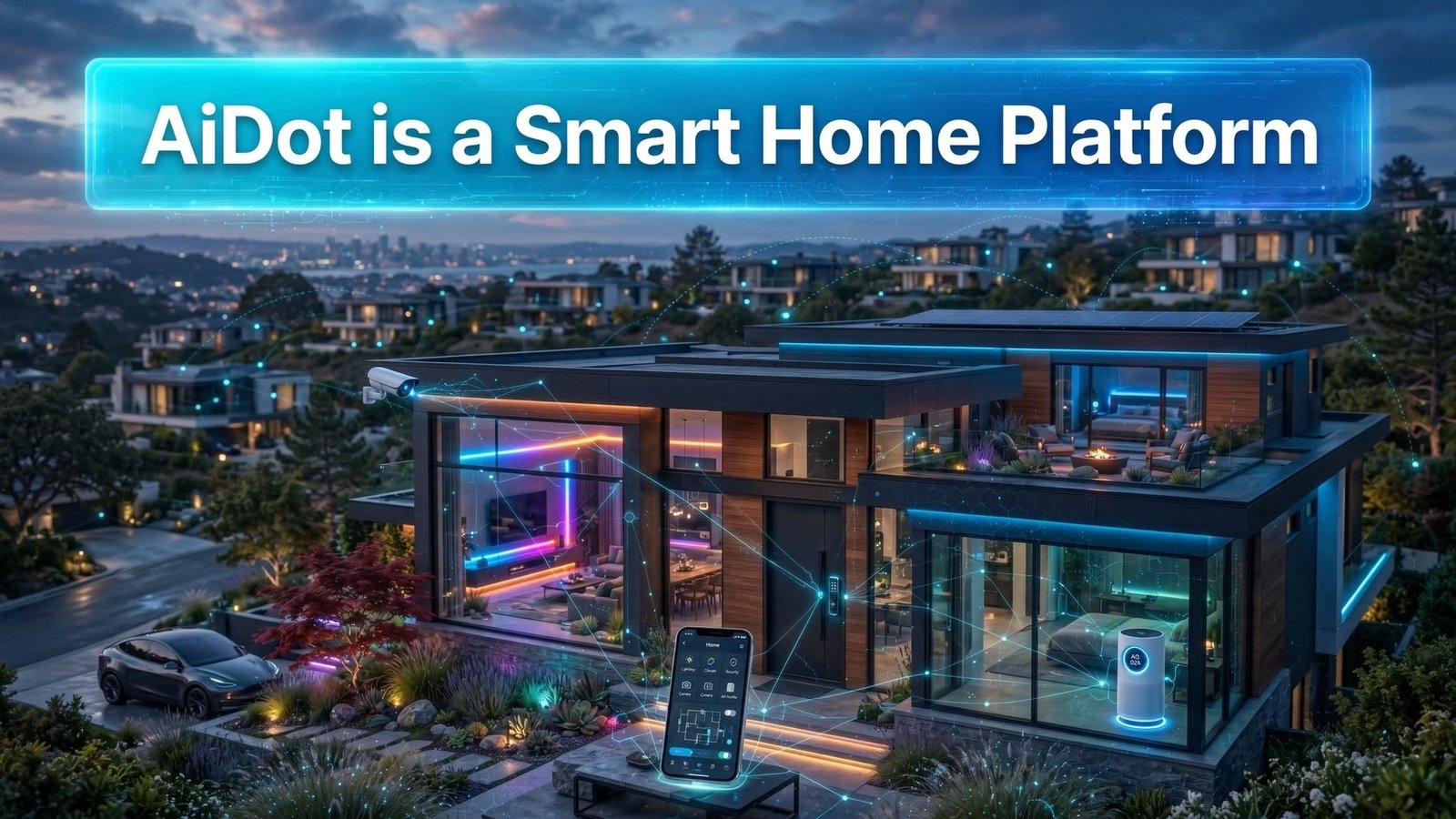
AiDot positions itself as a practical middle layer between affordable hardware and the major smart-home platforms. The company behind Linkind, OREiN, Winees and WELOV offers both its own app for unified control and broad Matter support so the same devices can live in multiple ecosystems at once. This reduces the usual friction of buying bulbs or plugs that only work well inside one brand’s walls.
What Makes Up the AiDot Ecosystem
At the center sits the AiDot app. Once devices are added there, users can create scenes, schedules and automations that span lighting, air quality, cameras and sensors. The “Works with AiDot” label indicates products designed to join this common control plane.
Core brands include:
- Linkind – primarily smart bulbs, strips, outdoor lights, plugs and switches, many now Matter-certified
- OREiN – complementary lighting, including flood and filament styles
- Winees – outdoor and indoor cameras, solar options, leak detectors and related security sensors
- WELOV – air purifiers, notably among the first Matter-certified models in the category
Most devices rely on 2.4 GHz Wi-Fi plus Bluetooth for setup and local fallback. No separate AiDot hub is required for everyday operation, though Matter controllers (HomePod, Echo, Nest Hub, SmartThings hub, etc.) unlock the full multi-platform experience.
Matter Support and Cross-Platform Control
Matter is the clearest differentiator for recent AiDot products. Certified devices can be added to Apple Home, Google Home, Amazon Alexa and Samsung SmartThings, often simultaneously through multi-admin pairing. Setup typically involves scanning a QR code or entering a numeric code after the device is powered and on the correct network.
Benefits that matter in practice:
- Local communication reduces dependence on cloud round-trips for basic commands
- One physical device can appear in more than one ecosystem
- Future-proofing as more platforms deepen Matter device-type support
Not every feature is available on day one in every platform. Early reviews noted that Matter 1.2 device types such as certain air purifiers lagged in some controllers. Always check current platform documentation for the specific product category.
Major Ecosystem Integrations
Alexa, Google Home, Apple Home and SmartThings
These are the primary consumer destinations. Matter devices are added through the respective apps using a compatible controller. Voice control, routines and automations then follow the rules of that platform. Non-Matter AiDot devices can often still be linked via the AiDot app’s third-party connection flow, though the experience is less universal.
Practical notes:
- A Matter controller is required for remote access and most automations outside the AiDot app
- 2.4 GHz Wi-Fi is essential during pairing
- Multi-admin lets you keep the same bulb in Apple Home and Alexa without buying two sets of hardware
Home Assistant
Home Assistant includes a built-in AiDot integration focused on Wi-Fi lights (A19, BR30 and similar). Devices must first be added to an AiDot account. The integration then pulls the device list from the cloud and maintains local TCP connections for real-time control and status. Brightness, color temperature and RGBW are supported according to the hardware. Community custom components and HACS options also exist for users who prefer alternative setups.
This route appeals to users who want local-first operation and deeper automation without relying solely on the vendor app.
IFTTT and Other Automation Layers
IFTTT connections allow triggers and actions involving AiDot devices to interact with hundreds of other services. Common patterns include motion or door events driving lighting scenes, or schedules that span AiDot and non-AiDot hardware. The integration surface is useful but less granular than native Matter or Home Assistant automations.
Setup Path and Practical Considerations
Typical flow:
- Download the AiDot app and create an account
- Power the device and let the app discover it (or use the Matter QR code for direct platform pairing)
- Optionally link the device or account to Alexa, Google, Apple Home or SmartThings
- Build scenes and schedules inside the AiDot app or the target platform
Local control is available for many functions even when the internet is down, especially with Matter and the Home Assistant path. Full remote access and some advanced features still depend on cloud services or a home hub.
Limitations worth noting:
- Device-type support in Matter platforms is not perfectly uniform; newer categories can lag
- Some older non-Matter AiDot devices offer narrower third-party options
- Network requirements (2.4 GHz, stable Bluetooth during setup) still trip up first-time installs
Strengths and Realistic Gaps
Strengths include affordable Matter hardware, a single app that covers multiple product categories, and genuine multi-ecosystem flexibility. The presence of Home Assistant support and IFTTT further widens the options for advanced users.
Gaps remain around perfect feature parity across every controller, the usual Wi-Fi congestion issues common to all cloud-adjacent devices, and the fact that the deepest experience still lives inside the AiDot app for non-Matter or partially supported products. Buyers who already live entirely inside one ecosystem may not need AiDot’s bridging role; those building mixed systems or starting fresh often find the combination of price and Matter support attractive.
Frequently Asked Questions
Does AiDot require its own hub?
No. Wi-Fi and Bluetooth handle direct connections. A Matter controller is needed only for full multi-platform remote control and advanced automations.
Can one AiDot device work with both Alexa and Apple Home?
Yes, when the device is Matter-certified and multi-admin is used.
Is there local control?
Yes for many operations, especially via Matter and the Home Assistant integration. Cloud dependence varies by feature and device.
Which brands sit under AiDot?
Linkind, OREiN, Winees and WELOV are the primary ones currently promoted together.
How current is Matter support?
AiDot has shipped substantial volumes of Matter bulbs and was early with a Matter air purifier. Platform-side support for every device type continues to evolve; check the specific product and target ecosystem before relying on advanced features.
The AiDot ecosystem works best when treated as a flexible hardware layer rather than a closed garden. Matter gives the devices a passport into the major platforms; the AiDot app provides a convenient common control surface; and open-source options such as Home Assistant add local depth. For users who want capable, reasonably priced devices that refuse to be locked into a single voice assistant, the combination is one of the more practical choices available today.